

Key Takeaways
- Strong knees help you stay mobile and prevent falls in your daily activities.
- Simple seated and standing exercises can strengthen your knees safely at home.
- Start slowly with 5-10 repetitions and gradually build your strength over time.
- Gentle stretches after exercise help reduce stiffness and support joint health.
- Talk with your healthcare provider before starting any new exercise routine.
Why Strong Knees Help You Stay Active and Independent
Your knees carry you through every step of your day, from getting out of bed to walking around your home. When your knee muscles feel weak or stiff, simple tasks like climbing stairs or standing up from a chair can become challenging and frustrating.
Building knee strength through gentle exercises can help you maintain your mobility, reduce your risk of falls, and keep doing the activities you love with greater ease and comfort. Strong muscles around your knees act like natural shock absorbers, protecting your joints and making movement feel smoother and more stable.
At Carrick Glen Senior Living, residents discover that maintaining physical activity through structured programs supports their long-term wellness goals. If you’re considering a comprehensive approach to senior care that includes independent living options with wellness support, proper knee strength can help you make the most of available amenities.
How to Start Your Knee Exercise Routine Safely
Before you begin any knee strengthening routine, check with your doctor or physical therapist, especially if you have knee pain or previous injuries. They can help you understand which exercises work for your specific situation and any limitations to keep in mind.
You’ll need minimal equipment to get started: a sturdy chair with arms, a wall for support, and comfortable clothing that lets you move freely. Pay attention to your body during exercise, and stop if you feel sharp pain, dizziness, or unusual discomfort. Regular exercise can be particularly beneficial for adults who want to maintain their independence and physical capabilities.
Warm-Up Tips Before You Begin
Start each exercise session with 5 minutes of gentle movement to prepare your joints. Try marching in place while seated, rolling your shoulders, or doing slow ankle circles. These simple movements help increase blood flow to your muscles and reduce your risk of strain.
Simple Seated Knee Exercises You Can Do at Home
Seated exercises give you stability and control while building strength. Sit tall in your chair with your feet flat on the floor and your back supported. For seated leg raises, slowly straighten one leg until it’s parallel to the floor, hold for 3 seconds, then lower it back down. Start with 5 repetitions on each leg.
Ankle pumps and circles help improve circulation while strengthening the muscles around your knees. Lift one foot slightly off the floor and flex your ankle up and down 10 times, then make slow circles in each direction. Seated marching involves lifting your knees one at a time as if you’re walking in place while sitting down. Chair exercises offer a safe way to build strength without putting excess stress on your joints.
Chair-Supported Standing Exercises
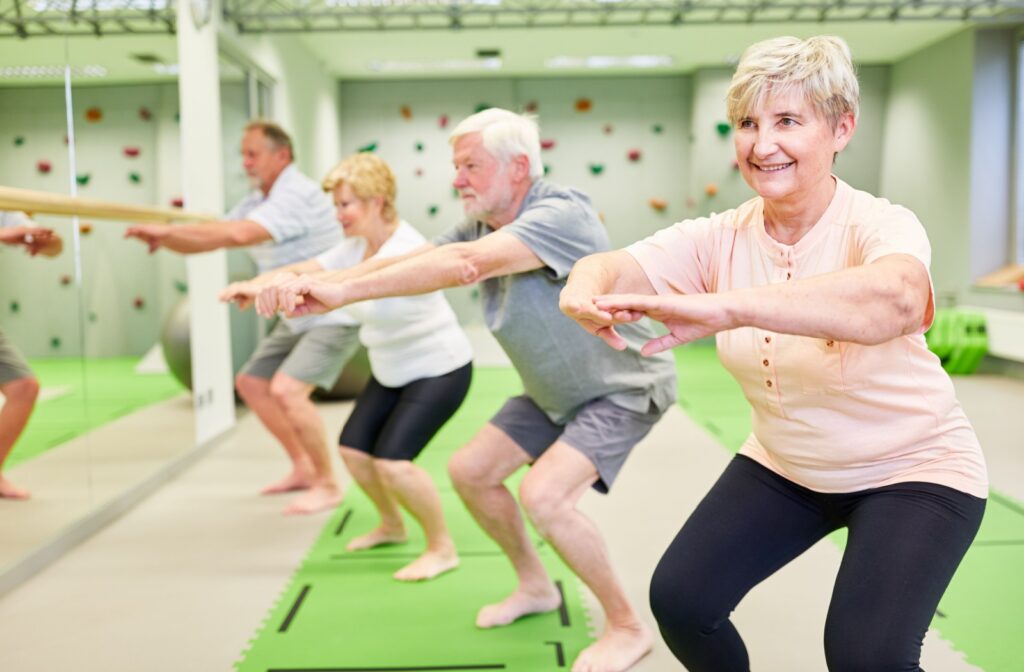
When you’re ready to progress, try standing exercises using your chair for balance. Hold the chair back and do gentle knee bends, lowering yourself partway down as if you’re about to sit, then standing back up. This movement strengthens your thigh muscles and improves your ability to get up from chairs.
Heel-toe raises help strengthen your calf muscles, which support your knees during walking. Stand behind your chair, rise on your toes, hold for 2 seconds, then rock back onto your heels. These exercises improve your balance and ankle strength at the same time.
Gentle Stretches to Support Your Knee Health
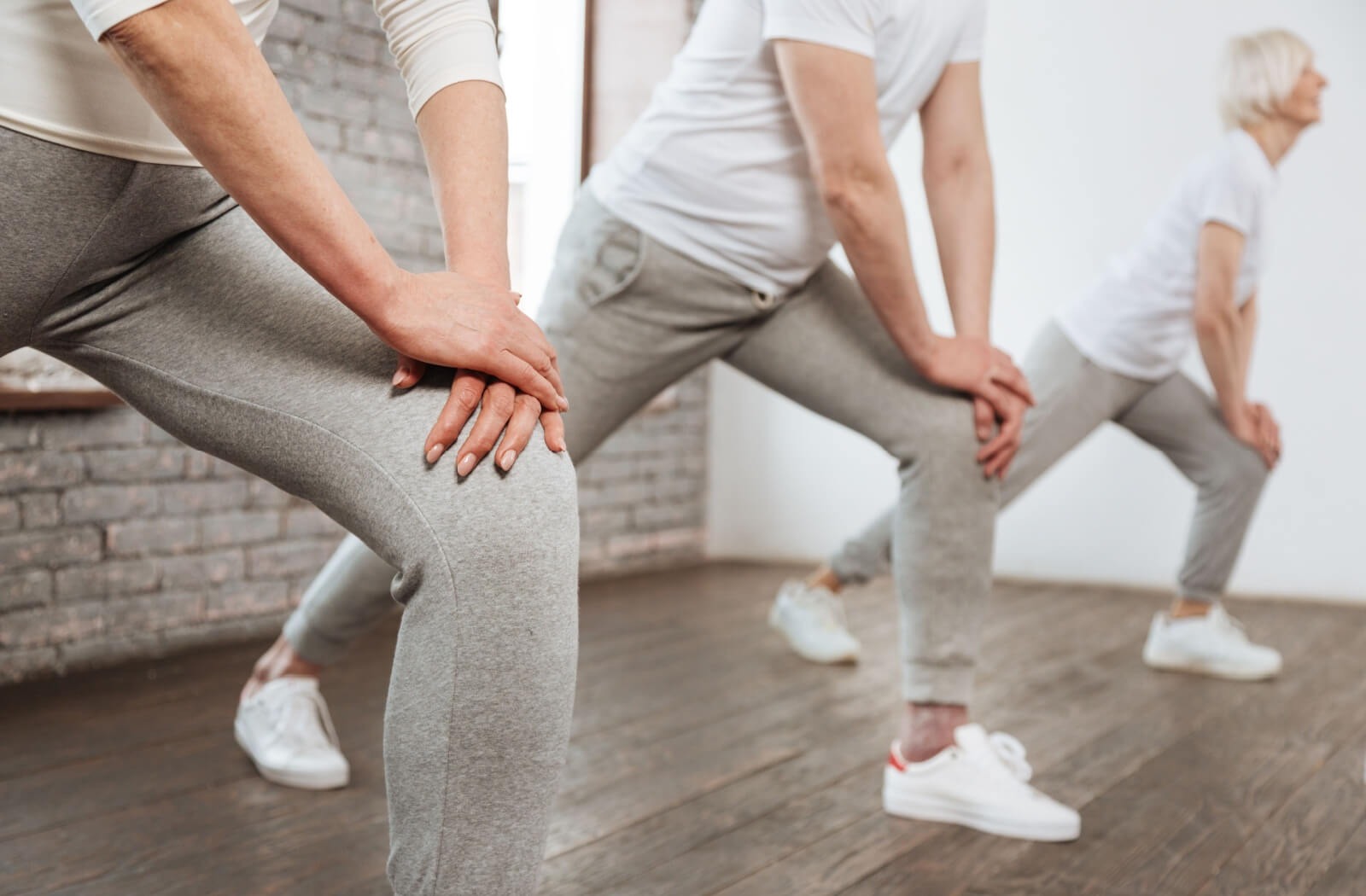
Stretching after your strengthening exercises helps prevent stiffness and keeps your muscles flexible. For a seated hamstring stretch, sit on the edge of your chair and extend one leg straight out with your heel on the floor. Lean forward gently until you feel a mild stretch behind your thigh.
Standing calf stretches against the wall help loosen tight muscles that can affect your knee comfort. Place your hands against a wall, step one foot back, and gently lean forward while keeping your back heel on the ground. Hold each stretch for 15-30 seconds and breathe deeply while you stretch. If you experience ongoing mobility challenges, you might benefit from exploring assisted living options that offer additional support with daily activities.
When and How Often to Stretch
The ideal time to stretch is after your muscles are warm, either following your strengthening exercises or after a warm shower. Combine gentle stretches with your exercise routine 2-3 times per week, and consider doing light stretches on your non-exercise days to maintain flexibility.
Making Knee Exercises Part of Your Weekly Routine
Aim to do your knee strengthening exercises 2-3 times per week, allowing a day of rest between sessions. Start with 5-10 repetitions of each exercise and gradually increase as you feel stronger. Keep a simple calendar or notebook to track your progress and celebrate small improvements, like being able to do more repetitions or feeling steadier during exercises.
Set yourself up for success by choosing consistent days and times for your routine. Many people find that exercising in the morning gives them energy for the day, while others prefer afternoon sessions when their joints feel more limber. Research shows that low-impact exercises can significantly improve quality of life and reduce fall risk when practiced regularly.
Exercise Support in Senior Living Communities
Senior living communities often offer group exercise classes that make staying active more enjoyable and social. You can benefit from trained staff guidance, safe exercise spaces designed with seniors in mind, and the motivation that comes from exercising alongside others who share similar goals.
Stop exercising and contact your healthcare provider if you experience severe pain, significant swelling, or if your knee gives out during activities. Physical therapists can create personalized exercise programs that address your specific needs and help you progress safely. Balance exercises can complement your knee strengthening routine to provide comprehensive fall prevention benefits.
At Carrick Glen Senior Living, the caring team understands how important staying active is for your overall well-being. With access to wellness programs, supportive staff, and a community that encourages healthy living, you can feel confident pursuing your fitness goals in a nurturing environment that puts your health and happiness first. Book a tour today to visit our community!